Torque and speed
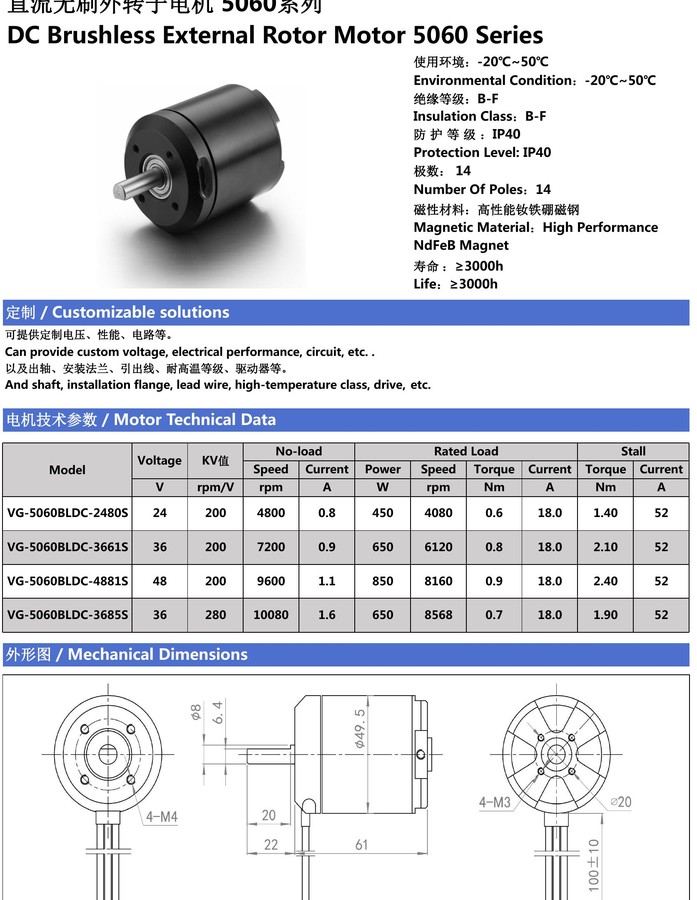
Confirm rated torque, peak torque, output speed, acceleration, reduction ratio and duty cycle before selecting the motor size.
BLDC Motor for Robot Joint
Choose BLDC motor directions for robot joints by torque, speed, voltage, duty cycle, temperature rise, encoder feedback, gearbox structure and production test requirements.
Engineering Review
Confirm rated torque, peak torque, output speed, acceleration, reduction ratio and duty cycle before selecting the motor size.
Robot joints often have limited cooling space. Current, winding, housing, duty cycle and temperature rise must be reviewed together.
Hall sensor, encoder, brake, driver current, control mode and communication method affect integration and test planning.
Quotation Checklist
Send voltage, torque, speed, size and quantity. We will help evaluate the motor direction.